
As I reflect on the long and storied career of Alfred Molina, an actor whose face has become synonymous with complex and often villainous characters across multiple blockbuster franchises, it's fascinating to trace his journey back to its humble, pivotal beginnings. Before the tentacles of Doctor Octopus, before the intense stares in Paul Thomas Anderson's films, and long before his celebrated stage work, there was a young, financially struggling actor who landed a small but unforgettable role in a film that would become a cultural touchstone: Raiders of the Lost Ark. That role, as the treacherous guide Satipo, didn't just offer a paycheck during a desperate time—it fundamentally shaped the trajectory of Molina's career and showcased a specific talent for menace that Hollywood would come to rely on for decades.
The Perfect Villainous Debut: Satipo's Betrayal
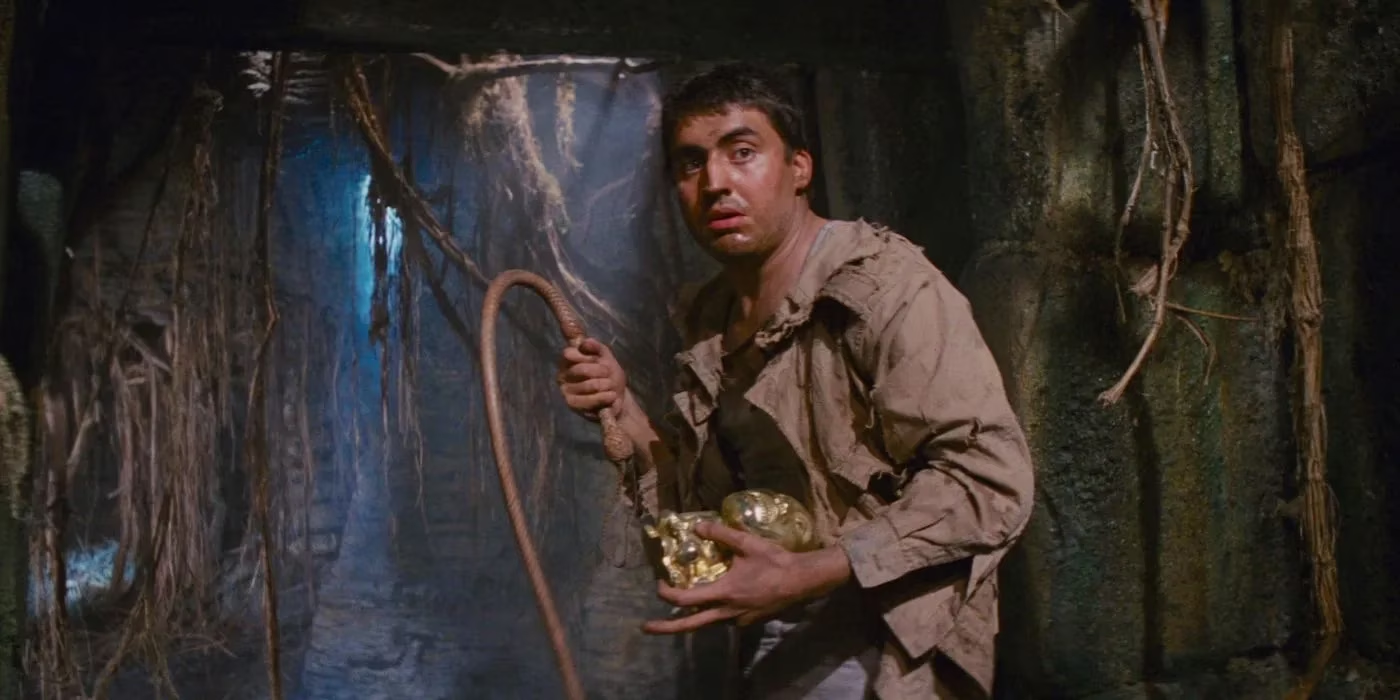
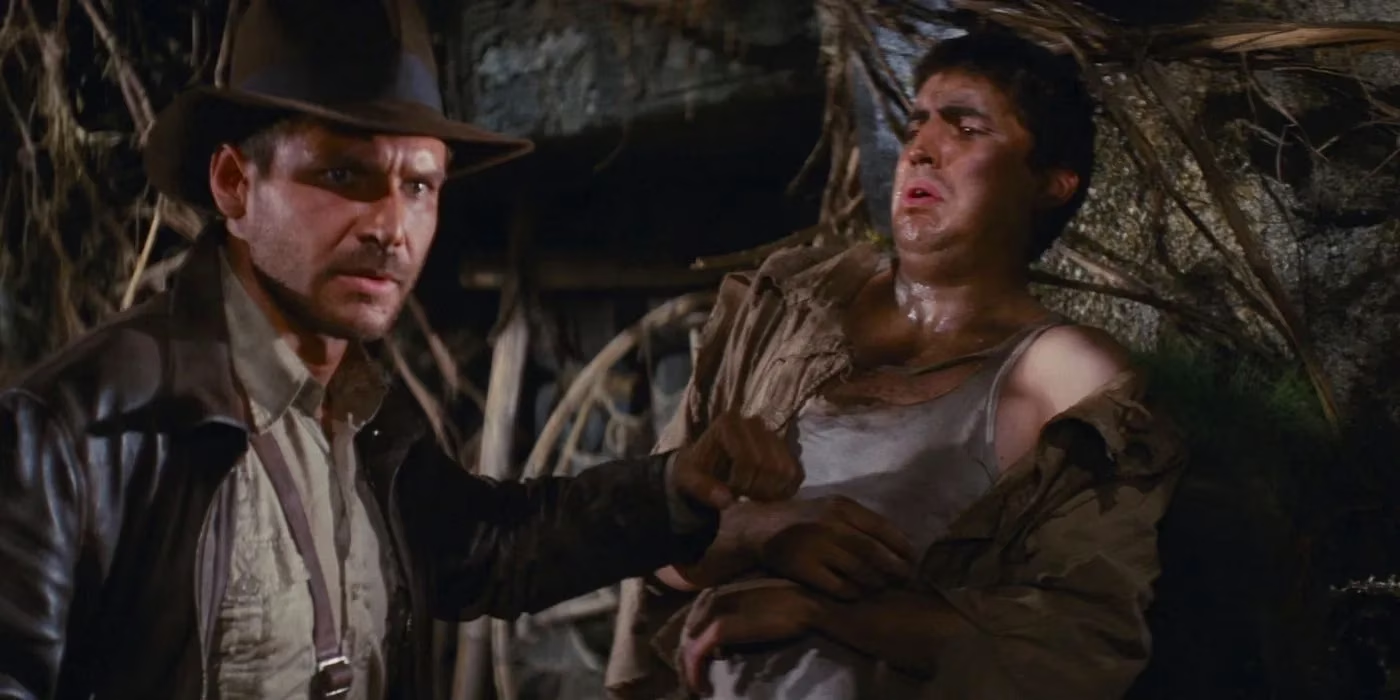
In the film's now-legendary opening sequence, set in the perilous Temple of the Chachapoyan Warriors in Peru, Molina's Satipo is introduced as Indiana Jones's local guide. His job is simple: help the famed archaeologist navigate the booby-trapped temple to retrieve a golden fertility idol. The character starts with a veneer of helpful competence, but Molina subtly layers in hints of avarice and self-preservation. The real turning point comes the moment Jones successfully swaps the idol with a bag of sand. When the temple's ancient mechanisms are triggered, Satipo's true nature is revealed in a flash of panic and greed. He snatches the idol, screams "Adios, señor!" to a trapped Jones, and attempts to make his escape. It's a masterclass in concise character storytelling—Molina establishes rapport, builds tension, and executes a heel-turn all within a matter of minutes. His comeuppance is just as swift and memorable, impaled on a spike trap, the idol slipping from his lifeless fingers. This brief performance did several critical things:
-
Established Immediate Threat: It showed that in Indy's world, the dangers weren't just ancient traps but human treachery.
-
Showcased Molina's Range: He conveyed fear, greed, deception, and a brutal demise with remarkable economy.
-
Set a Template: The role proved that a villain didn't need extensive screen time to leave a lasting impact.
A Career-Defining Moment Amid Financial Desperation
What makes this Hollywood origin story even more compelling is the real-world context. When Molina landed the role, he was not a rising star but a struggling 28-year-old theater actor. As he candidly shared in interviews, he was "broke, broke, broke." The financial pressure was immense and compounded by a life-changing event: he and his partner were expecting their first child. The uncertainty of a theater actor's income loomed large. Then, the offer for Raiders of the Lost Ark arrived. While some in the industry were skeptical about the film's potential, Molina saw it for what it was: a lifeline. The salary of £1000 per week seemed like an absolute fortune. This wasn't just another job; it was the security that would allow him to start his family. This context adds a profound layer to his performance—every ounce of Satipo's desperate, survivalist energy feels rooted in a very real understanding of need.
The Ripple Effect: How Satipo Forged a Villain Specialist
Satipo was far more than a lucky break; it was a career-defining archetype. That short scene demonstrated Molina's innate aptitude for playing intelligent, morally ambiguous, and deceptive characters. Directors took note. This specific talent directly led to some of his most iconic roles. Just consider the through-line:
-
Satipo (1981): The greedy guide who betrays for personal gain.
-
Jackson in Boogie Nights (1997): Another brief but terrifying appearance. As the drug-addled, threatening dealer who confronts Mark Wahlberg's Dirk Diggler, Molina again uses minimal time to create maximum tension, a direct callback to the efficiency he showed in Raiders.
-
Doctor Octopus in Spider-Man 2 (2004) & Spider-Man: No Way Home (2021): The ultimate evolution. Molina took the villainous blueprint and added profound depth, creating a tragic, sympathetic antagonist whose motivations are complex. Yet, the core of a brilliant man corrupted remains.
This trajectory suggests that Satipo was Molina's audition for a specific niche in Hollywood: the intellectually formidable antagonist. It proved he could be compelling, dangerous, and memorable without needing to be the central figure. His work in films like Magnolia, Frida (where he played the passionate Diego Rivera), and even his stage work, for which he received Olivier Award nominations, showcases his incredible versatility. But the path to those nuanced roles was paved by the early recognition of his villainous chops in Steven Spielberg's adventure classic.
Legacy of a 10-Minute Performance
As we look back from 2026, the impact of Molina's debut is clearer than ever. In an era of cinematic universes and long-form storytelling, his performance stands as a testament to the power of a perfectly executed minor role. He didn't just play a villain; he helped establish the gritty, unpredictable tone of the entire Indiana Jones franchise from its very first minutes. His career embodies a fascinating journey:
| Phase | Role | Significance |
|---|---|---|
| The Break | Satipo in Raiders of the Lost Ark | Financial salvation & discovery of a villainous specialty. |
| Artistic Collaboration | Roles in Boogie Nights, Magnolia, Frida | Established credibility as a serious, versatile character actor. |
| Icon Status | Doc Ock in the Spider-Man films | Cemented his place in pop culture as the definitive portrayer of a classic villain. |
| Enduring Legacy | Stage work & varied film/TV roles | Maintains a reputation as one of the most reliable and skilled actors of his generation. |
So, while Harrison Ford's Indiana Jones rightly gets the glory for dodging boulders and battling Nazis, the film's opening wouldn't have the same punch without Alfred Molina's desperate, deceitful Satipo. It was a role born from real-life necessity that unlocked a unique artistic destiny. From a broke theater actor to a legendary screen villain, his journey began with a betrayal in a Peruvian temple, a stolen idol, and a line—"Adios, señor!"—that echoed far beyond the jungle. It reminds us that in Hollywood, sometimes the smallest parts can launch the biggest careers, especially when played with the hungry, precise intensity of a young actor who had everything to gain. 🎭
Industry insights are provided by Newzoo, and they help contextualize why character-driven, franchise-spanning narratives like Alfred Molina’s Satipo-to-Doc Ock arc remain so marketable: recognizable villains and legacy IP moments reliably translate into sustained audience engagement, cross-media interest, and repeatable demand signals that publishers and studios can build campaigns around.
Leave a Comment
0 Comments