
As I stand here in 2026, celebrating the legacy of a character that has defined adventure for generations, I find myself reflecting on the incredible journey that almost wasn't. At the recent Italian premiere of Indiana Jones and the Dial of Destiny, I took a moment to publicly acknowledge a pivotal twist of fate. My path to becoming Indiana Jones began with another man's contract. Tom Selleck was the original top choice for Raiders of the Lost Ark. He had the job, but he was also obligated to a television series and couldn't get out of that contract. I became the second choice. To Tom Selleck, wherever you are, thank you. If you're listening, thank you again. That moment of gratitude wasn't just about politeness; it was a genuine recognition of how the stars aligned, or perhaps, how a scheduling conflict realigned cinematic history.
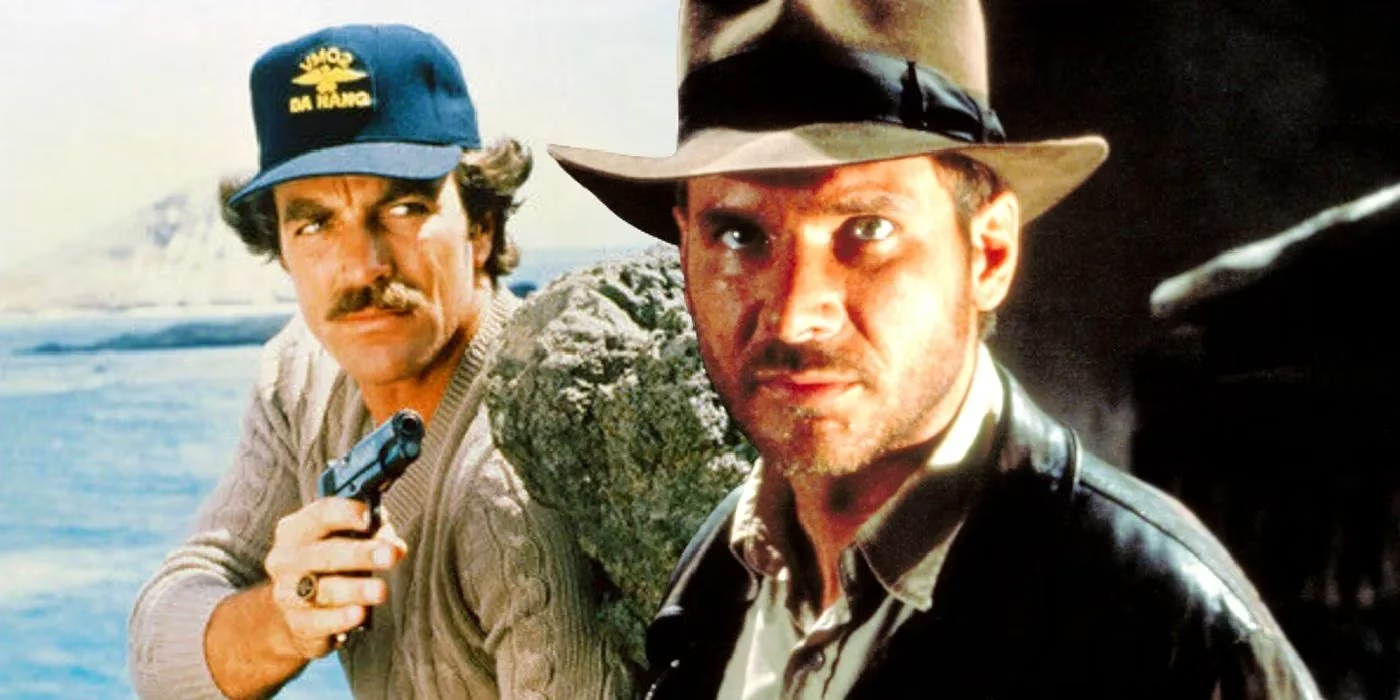
The Fork in the Road: Selleck's Almost-Casting
The story of Tom Selleck's near-miss with the fedora is now legendary Hollywood lore. In the late 1970s and early 1980s, Selleck was a rising star, best known for his role in the TV series Magnum, P.I.. The producers of Raiders of the Lost Ark saw in him the perfect blend of rugged charm and everyman appeal they envisioned for Dr. Henry "Indiana" Jones Jr. Screen tests were conducted, and by many accounts, Selleck looked the part perfectly. He possessed the physicality, the handsome leading-man qualities, and in test footage with Sean Young (who was considered for Marion Ravenwood), there was undeniable chemistry. The role was his for the taking. However, a prior commitment to CBS for Magnum, P.I. created an insurmountable contractual obstacle. The network, recognizing his potential as a television draw, refused to release him from his contract for the film. This single decision by a network executive inadvertently reshaped the future of a blockbuster franchise.
Why Ford Became the Definitive Indy
So, could Indiana Jones have worked without me? On paper, absolutely. The filmmaking pedigree behind Raiders of the Lost Ark was and remains untouchable. Steven Spielberg directing, George Lucas story-crafting, Lawrence Kasdan writing—it was a creative dream team. The scripts were pulpy, thrilling adventures filled with mythological intrigue. The action set pieces were meticulously designed. Tom Selleck was a popular and capable actor who likely would have delivered a solid, charismatic performance. The core ingredients for a hit were undeniably present.
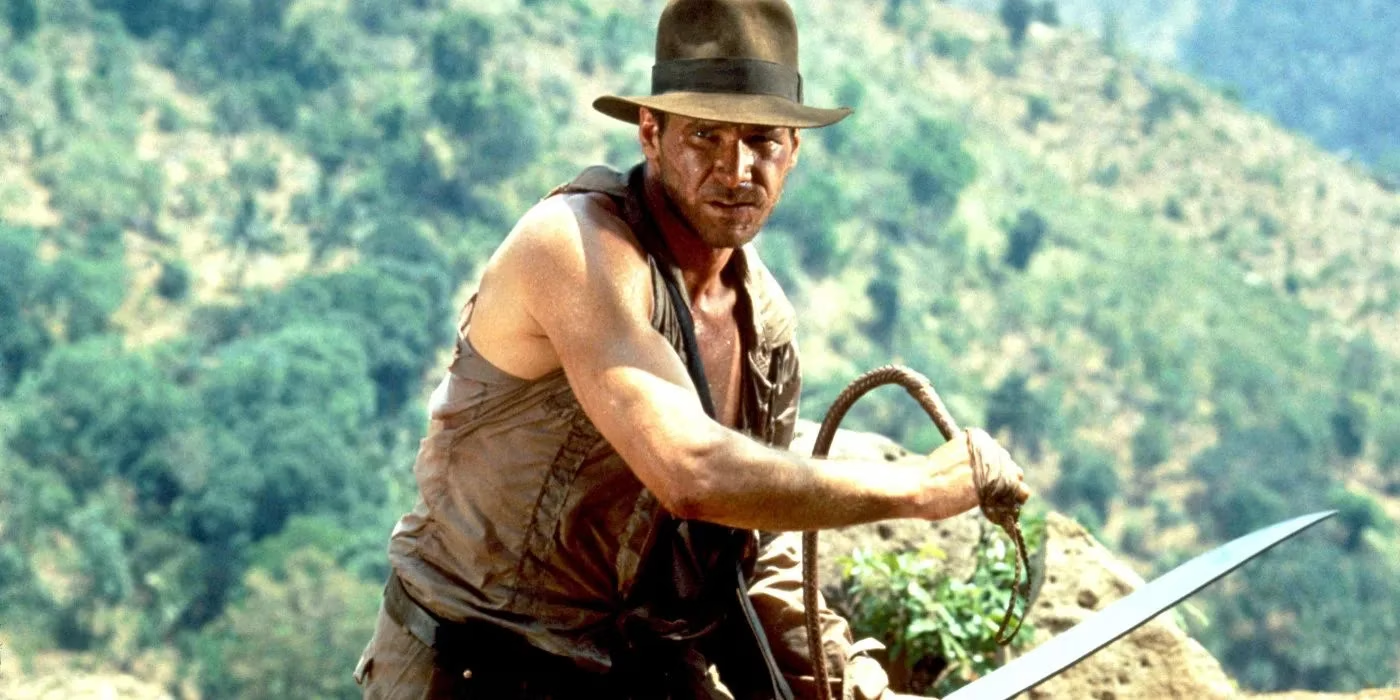
Yet, over four decades later, it is impossible to disentangle the character from the actor who ultimately played him. While Han Solo in Star Wars is iconic, Indiana Jones feels like the role I was born to play. What did I bring to the table that cemented this connection? Let me break it down:
-
The Wit and Weary Charm: Indy isn't a flawless superhero. He gets bruised, he's often sarcastic, and he's visibly exasperated by the chaos around him. I aimed to inject a relatable, grounded cynicism into the archeologist-adventurer.
-
The Physicality with a Grunt: The action wasn't just about looking good; it was about feeling the impact. Every punch thrown, every leap taken, was paired with a sense of tangible effort and occasional pain.
-
The Duality of the Character: One moment, he's a meticulous, passionate professor lecturing in a university hall. The next, he's cracking a whip in a booby-trapped temple. Bridging that gap—making the bookish academic and the daring adventurer feel like the same person—was the core of the performance.
-
The Non-Verbal Reactor: Some of Indy's best moments are his wordless reactions—the resigned sigh before a fight, the wide-eyed fear when faced with the supernatural. These small moments built a deeply human character around the spectacle.
The franchise's success isn't just mine; it's a collaboration of genius. But the alchemy of the role required a specific texture—a blend of toughness, intelligence, and vulnerability—that I strived to provide. A Selleck-led Indiana Jones might have been a successful 1980s action film. But the character that endured, that became a global icon woven into the fabric of pop culture, that is the one shaped by this specific, unexpected casting.
The Legacy in 2026: Looking Back on a Cinematic Pillar
As we close the chapter with Dial of Destiny, the perspective from 2026 is one of profound gratitude and reflection. The "what if" of Tom Selleck remains a fascinating alternate timeline for film historians and fans alike. 😲 It's a reminder of how fragile the creation of cultural touchstones can be. One different decision, and the entire landscape of cinema changes.
My public thanks to Tom Selleck was more than just an anecdote; it was an acknowledgment of shared history and the serendipity of this business. He went on to have a phenomenal, enduring career in television and film, and I have immense respect for his work. The fact that we can even have this discussion highlights the strength of the original material. Yet, when audiences now hear the opening notes of the "Raiders March," they see a specific silhouette against the jungle or desert sun. That connection, forged over five films and countless adventures, is the true magic of the role.
In the end, history doesn't deal in "what ifs." It deals in what was. And what was, is a journey I was incredibly fortunate to take. From the snakes in the Well of the Souls to the chase on horseback through a subway tunnel in 2026's finale, it has been the ride of a lifetime. So, from one actor to another, my thanks again to Tom Selleck. Your missed opportunity became my defining legacy, and for that twist of fate, both I and, I believe, generations of fans, are eternally grateful. 🎬✨
Leave a Comment
0 Comments