
In the annals of cinematic history, few tales are as gloriously absurd and fatefully intertwined as the one where the Man With No Name nearly stole the fedora from the Man With the Whip. Picture this: it's the late 1970s, and George Lucas, still buzzing from the cosmic success of a little film called Star Wars, has a dusty, thrilling idea for a new hero—a globe-trotting archaeologist named Indiana Jones. The script, the passion, the iconic bullwhip were all coiled and ready to strike. Yet, the monumental adventure, Raiders of the Lost Ark, was forced into a torturous limbo, its production schedule shattered not by a rival studio or a lack of funds, but by the gravitational pull of a single, squinting Hollywood legend: Clint Eastwood. This is the epic, exaggerated saga of how the Old West's most stoic gunslinger inadvertently became the greatest obstacle Indiana Jones ever faced before even setting foot on screen.
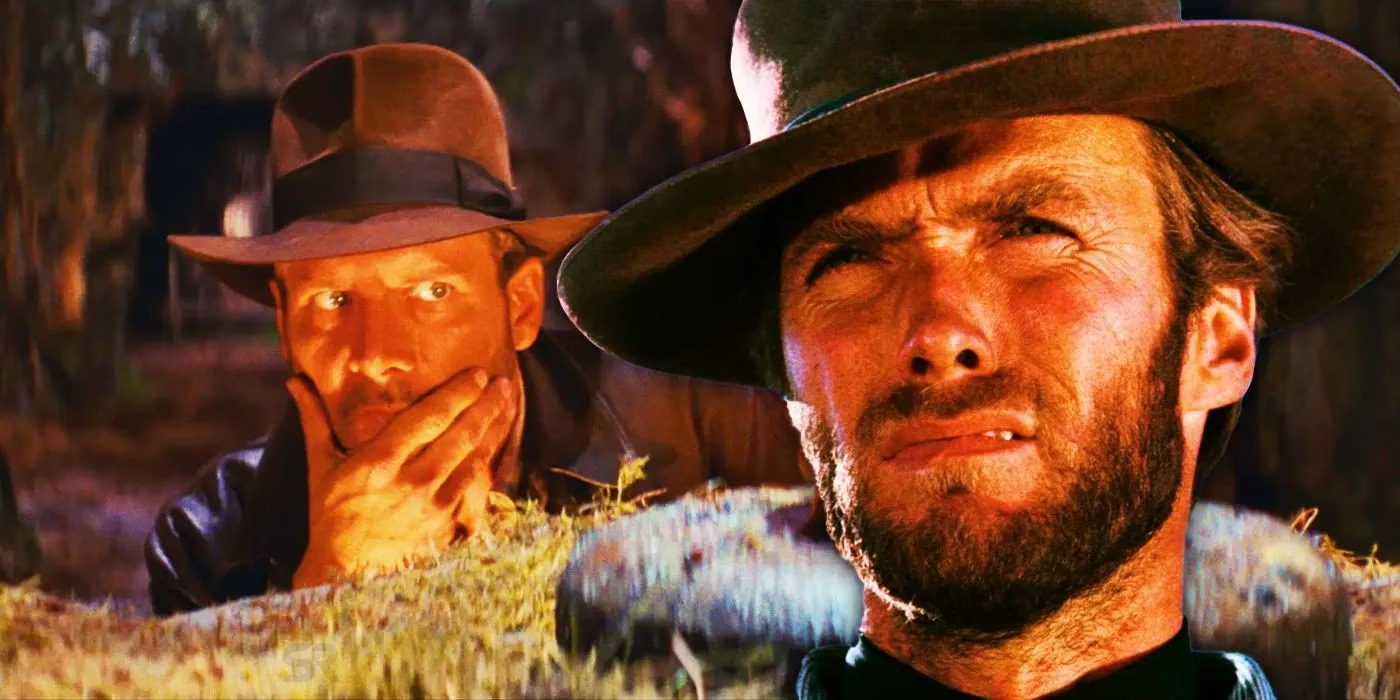
The Cinematic Heist: Eastwood's Unwitting Sabotage
The behind-the-scenes machinations were more convoluted than any booby-trapped temple. According to the sacred texts of filmmaking lore, specifically the documentary The Making of Raiders of The Lost Ark, George Lucas himself revealed the astonishing bottleneck. After initially shelving the Indy concept, Lucas shared his brainchild with a producer of formidable vision, Phil Kaufman. Kaufman didn't just listen; he was electrified. He became the project's spiritual architect, his contributions so pivotal he was the visionary who decreed the film's ultimate prize should be none other than the biblical, wrath-of-God-housing Ark of the Covenant. The partnership was cinematic destiny personified... until it wasn't.
In a twist of loyalty that would make any studio executive weep, Kaufman's fervor for Lucas's untested adventure saga was brutally eclipsed by the siren call of a sure thing. A Clint Eastwood vehicle beckoned—a project shimmering with the promise of box-office gold and critical acclaim, a far safer bet than hitching his wagon to Lucas's wild, whip-cracking concept. Kaufman abandoned the nascent Raiders to pledge his allegiance to Eastwood's camp. The film in question? The 1976 gritty Western masterpiece, The Outlaw Josey Wales. The irony, of course, is thicker than the mud on Josey Wales' boots: Kaufman was subsequently dismissed from that very production. In his gamble for stability, he lost both the legendary adventure he helped design and his place beside the Western icon. He was left in a professional no-man's-land, while the Indy project stalled, gathering dust like a forgotten relic.
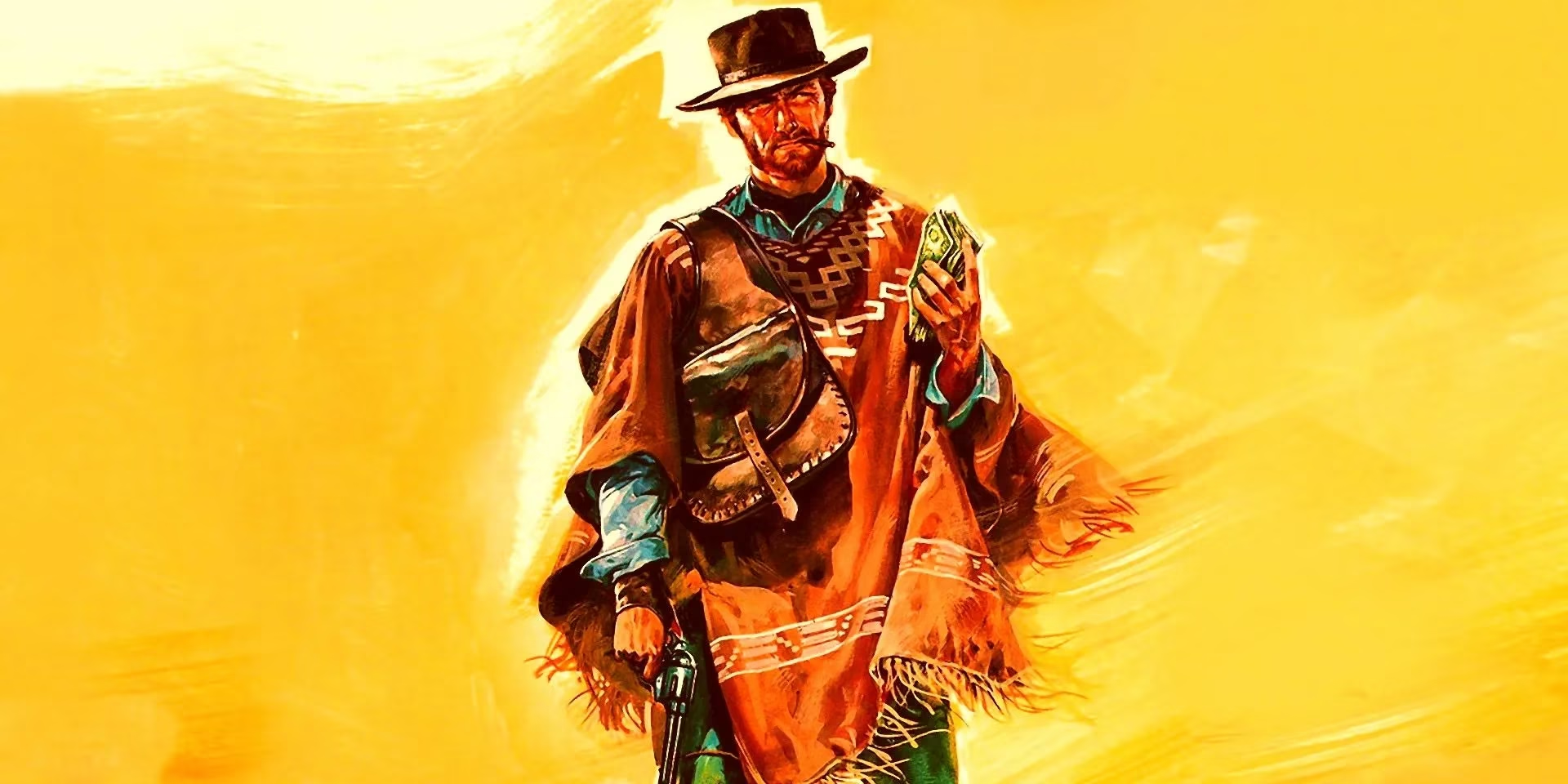
The Divine Intervention: Spielberg's Fortuitous Ascension
Now, one might think this delay was a catastrophic blow, a narrative dead end that could have doomed a franchise before it began. But no! This was no mere setback; it was a cosmic realignment, a blessing in disguise of biblical proportions! Lucas, initially wanting Kaufman to direct, was left in a director-less purgatory. He waited, he pondered, he likely stared at storyboards of rolling boulders with increasing despair. But this forced hiatus created a vacuum—a vacuum that fate rushed to fill with nothing less than directorial royalty.
Enter Steven Spielberg. By the late 70s, Spielberg wasn't just a director; he was a force of nature. He had already terrified audiences out of the water with Jaws and dazzled them with the celestial wonders of Close Encounters of the Third Kind. He was the blockbuster auteur, the man who could balance heart-pounding spectacle with character-driven soul. Lucas's "problem" became history's most spectacular solution. Handing the reins of Raiders to Spielberg wasn't just a good choice; it was a cinematic miracle. The delay, caused by Eastwood's indirect pull, allowed for the perfect alignment of stars: Lucas's boundless imagination, Spielberg's kinetic direction, and Harrison Ford's soon-to-be-iconic swagger. The film wasn't just made; it was forged in creative synergy.
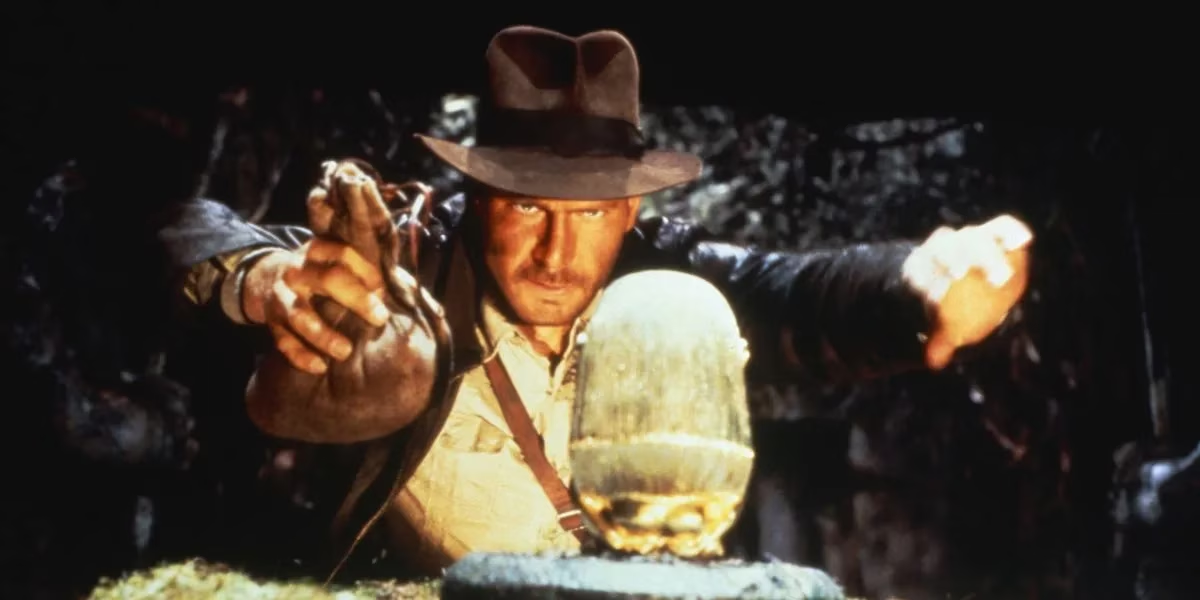
The Legacy Forged in Delay: An Empire Built on a Pause
Looking back from our vantage point in 2026, with the dust settled on Indiana Jones and the Dial of Destiny and the franchise's legacy etched permanently into pop culture's Mount Rushmore, the value of that delay is incalculable. Consider what was at stake:
-
The Director: Without the delay, no Spielberg. Without Spielberg, the breakneck pacing, the masterful set-pieces (the truck chase, anyone?), and the perfect blend of horror and humor might have been lost. The film's soul would have been fundamentally different.
-
The Tone: Spielberg's touch brought a serial-adventure purity that defined the genre for decades. A Kaufman-directed version, while potentially brilliant, remains one of film history's great "what-ifs," likely leaning grittier and less universally exuberant.
-
The Franchise Launchpad: Raiders didn't just succeed; it detonated a cultural explosion. It spawned four sequels (so far!), a television series, video games, comics, and a universe of merchandise. It made Harrison Ford a dual-franchise megastar and created an archetype endlessly imitated but never duplicated.
The delay, therefore, was not a obstacle but a crucible. It was the universe's way of ensuring Indy's first crack of the whip would be perfect. Clint Eastwood, entirely unaware, played the role of the reluctant guardian angel. His cinematic dominance created a diversion that allowed a better destiny to assemble itself. Phil Kaufman's choice, while personally costly, inadvertently performed the greatest service to adventure cinema imaginable. So, the next time you watch Indiana Jones outrun that giant boulder, remember: he was also outrunning the ghost of Clint Eastwood's scheduling conflict, and in doing so, he sprinted straight into immortality. 🎬✨
| The Key Players | Their Role in The Great Delay | The Ironic Outcome |
|---|---|---|
| Clint Eastwood | The Unwitting Magnet | His star power pulled a key producer away, creating a production vacuum. |
| Phil Kaufman | The Defecting Architect | Left Raiders for Eastwood's film, only to be fired from it. Missed cinematic immortality twice. |
| George Lucas | The Patient Visionary | Forced to wait, then made the legendary pivot to a new director. |
| Steven Spielberg | The Divine Replacement | The delay created the opening for him to step in and direct a masterpiece. |
In the end, the lost time was a small price to pay for a found legacy. The Ark was delayed, but its glory was never in doubt.
Leave a Comment
0 Comments