
Looking back from 2026, it's wild to think that Raiders of the Lost Ark, a film as solid and iconic as the Great Sphinx, almost didn't see the light of day. I mean, we're talking about the birth of Indiana Jones here! Fresh off the cosmic high of Star Wars, George Lucas met with his pal Steven Spielberg to cook up this love letter to the adventure serials of their youth. In those legendary brainstorming sessions with writer Lawrence Kasdan, they birthed Indy's whip, the rolling boulder of doom, and a treasure trove of cinematic gold. But their grandiose vision, a project with a scale they described as "unlike anything before," nearly sank the whole enterprise before it even left the harbor. The story of its creation is a rollercoaster of doubt, clever tricks, and ultimate triumph that's more thrilling than some of the film's own sequences.
The Budgetary Tightrope Walk
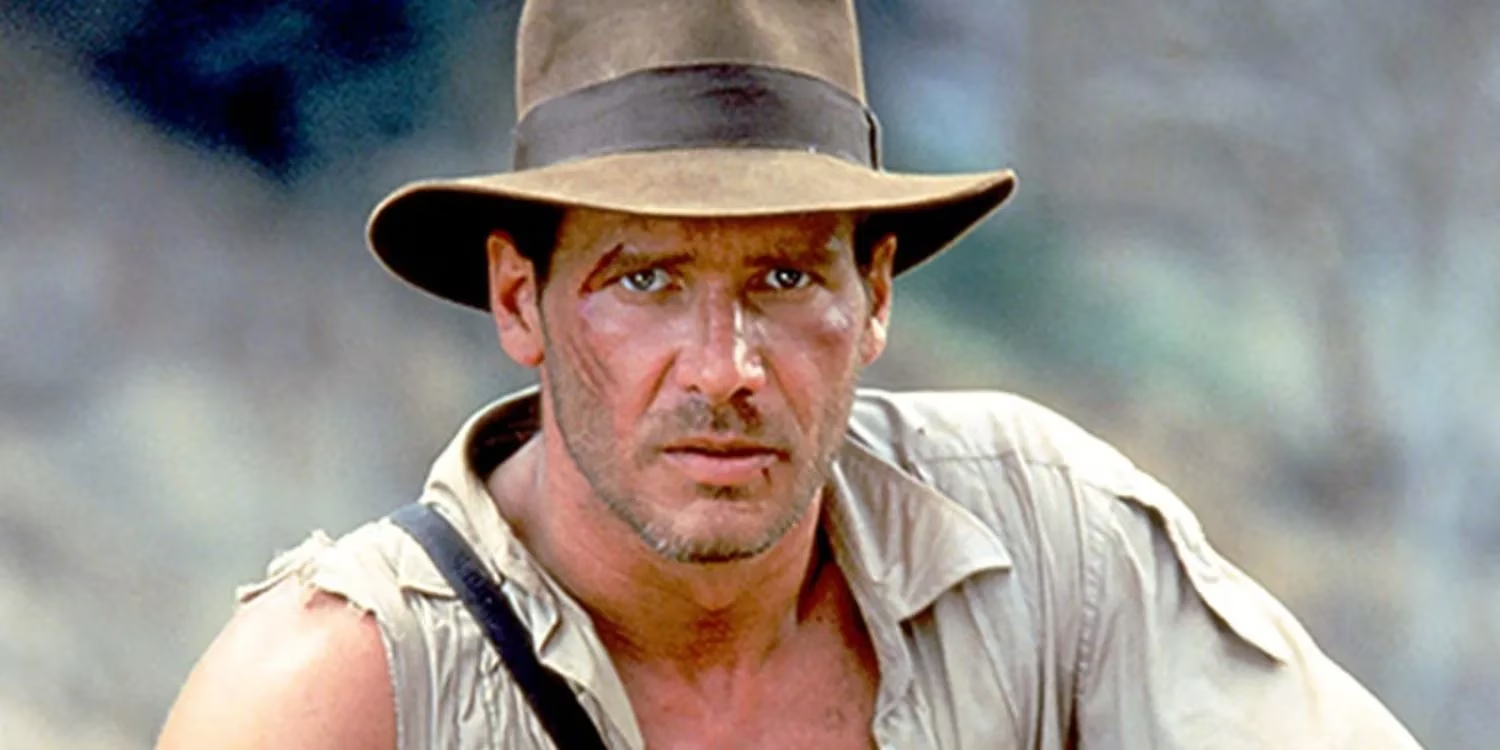
So, here's the juicy bit: getting this movie financed was like trying to sell ice to an Eskimo. In a behind-the-scenes documentary, George Lucas spilled the beans that Raiders almost didn't happen because nobody in Hollywood wanted to foot the bill. Lucas, playing the confident salesman, went around town claiming he could make this globe-trotting epic for a mere $20 million. To the studio executives, this number was about as believable as a talking snake; it was an incredibly low budget for the promised spectacle. They all envisioned a financial black hole, a project destined to hemorrhage cash faster than a leaky bucket in the Well of Souls. The fear of a runaway budget made them more skittish than a cat in a room full of rocking chairs.
The Miracle on a Shoestring
But oh, how wrong they were! Lucas's estimate wasn't just close; it was practically psychic. The final film cost only $22 million—a rounding error in today's bloated blockbuster economy. So, how did they pull it off? It wasn't magic (though the Ark's contents might disagree); it was sheer, unadulterated filmmaking ingenuity.
Lucas and Spielberg became masters of the creative workaround, employing a toolkit straight out of the old serials they adored:
-
Practical Over Pixel: They relied on physical sets, miniatures, and in-camera effects instead of expensive, nascent CGI.
-
Swift and Sure Shooting: Spielberg directed with the efficiency of a military operation, refusing to get bogged down by perfectionism for minor details. "Fix it in post" wasn't the mantra; "get it on film" was.
-
Location Leverage: They maximized a few key locations to stand in for multiple exotic settings, a trick as clever as using a single actor to play multiple roles in a stage play.
This frugal genius was even more impressive given Spielberg's recent track record. His previous film, 1941, had been a production nightmare and a critical flop, making him about as popular in studio boardrooms as a tax auditor. Lucas, however, dug in his heels like Indy clinging to a cliff edge, insisting that Spielberg was the only director for the job. That gamble, my friends, paid off more handsomely than finding the Holy Grail.
Why Everyone's Doubts Melted Like Nazi Faces
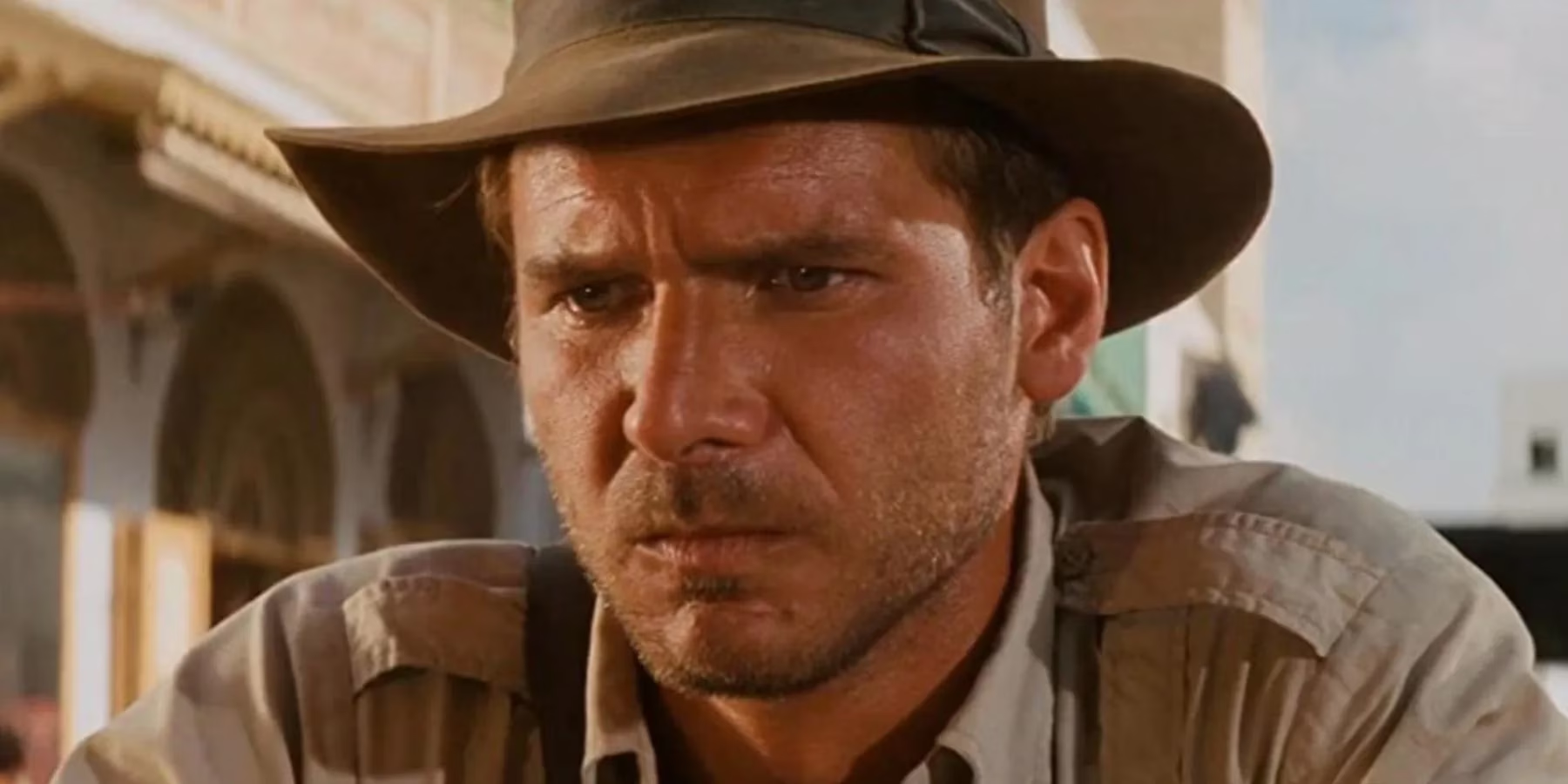
On paper, Raiders of the Lost Ark sounded like a budget-busting monster. But Lucas and Spielberg treated the constraints not as a cage, but as a catalyst for creativity. The film's breakneck pace and relentless action weren't just stylistic choices; they were economic necessities that ended up defining its thrilling character. The studio's fears were as misplaced as Belloq thinking he could control the Ark's power.
Let's break down the before-and-after perspective:
| Studio Perception (Pre-Release) | Reality (Post-Release) |
|---|---|
| A risky, over-ambitious project 🚨 | A perfectly executed blueprint for adventure ✅ |
| Steven Spielberg is a liability after 1941 😬 | Spielberg's direction is the franchise's beating heart ❤️ |
| A $20M budget is a fantasy 🧾 | The film cost $22M and became a printing press for money 💰 |
| Likely to be a financial disaster 📉 | Made nearly $400 million and launched a multi-billion dollar empire 🚀 |
The Paramount executives who finally said "yes" must have felt like they'd won the lottery. The film wasn't just a hit; it was a cultural earthquake. It proved that heart, humor, and practical craftsmanship could outperform mere financial firepower. The subsequent sequels and the enduring legacy, still vibrant in 2026, all stem from this one, doubt-riddled, miraculously made movie. It’s a testament to the idea that sometimes, the greatest treasures are found not by following a safe map, but by daring to draw a new one, even when everyone says you're crazy.
Leave a Comment
0 Comments