
Hey everyone! 👋 As a lifelong Indiana Jones fan who's rewatched these classics more times than I can count, I've always been fascinated by those nagging plot questions that pop up. You know the ones—why did Indy even need to chase the Ark when the Nazis would've just killed themselves with it anyway? 🤔 And wait, if the Holy Grail can't leave the temple, why was everyone so desperate to find it? These aren't just random oversights—they're actually brilliant narrative choices that reveal something deeper about Indy's character and the entire franchise's philosophy.
Raiders & Last Crusade: Two Movies, One Paradox
Let's break this down! In Raiders of the Lost Ark, we all remember that iconic climax where Belloq and the Nazis get their faces melted off after opening the Ark. Indy and Marion survive by keeping their eyes shut (smart move, Indy!). But here's the thing everyone talks about: Couldn't Indy have just let the Nazis take it to Hitler? The same thing would've happened, right? Hitler opens it, boom—problem solved! No dangerous temple traps, no fistfights on flying wings, just... letting divine wrath handle it.

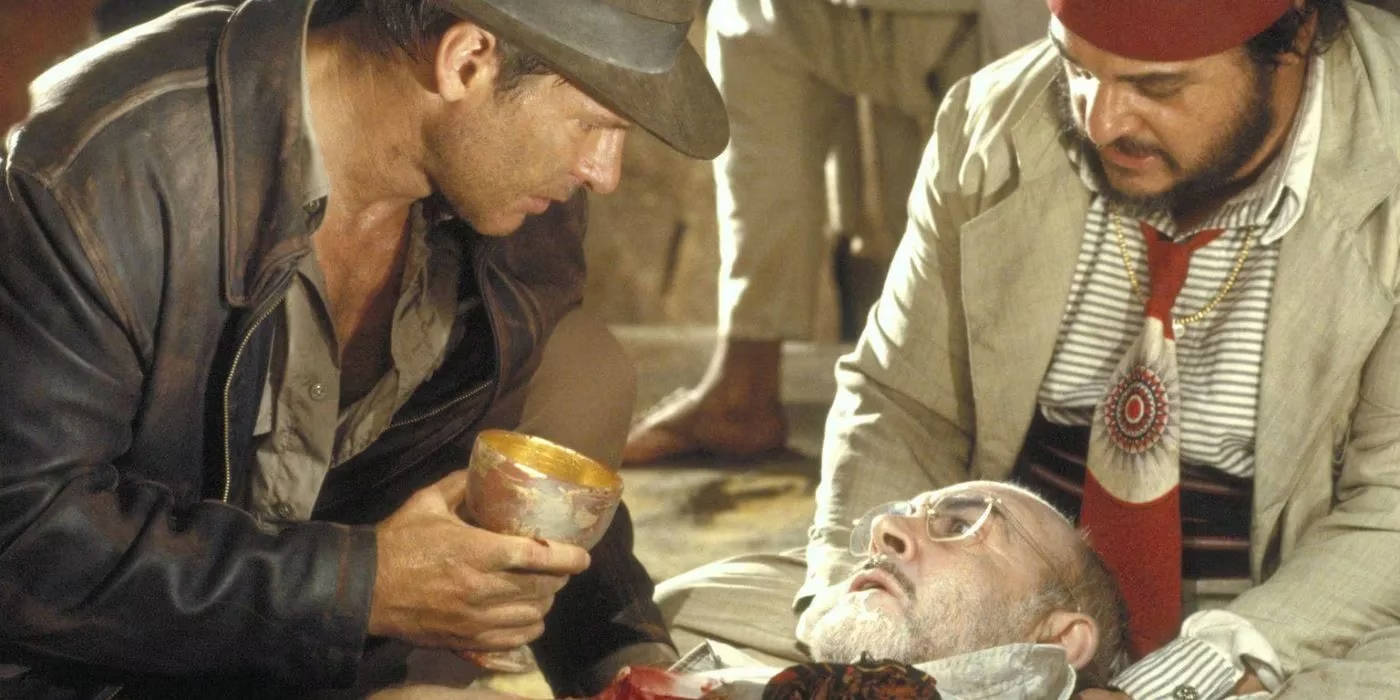
Fast forward to Indiana Jones and the Last Crusade, and we get a strangely similar situation! When Indy finally reaches the Grail temple and meets the ancient knight (seriously, how cool is that reveal?), he learns the Grail has a catch: it can't pass the seal on the temple floor. The knight calls it "the boundary, and the price of immortality." So... Donovan and the Nazis wanted immortality and world domination through the Grail, but it literally can't leave the room? And the immortality it grants vanishes outside the temple? Wait, what was the point of their whole quest then?
The Real Test Isn't Finding It—It's Understanding It
Here's where it gets interesting! These apparent "plot holes" aren't mistakes—they're the entire point! Think about it: What do Belloq, Donovan, and Hitler all have in common? They see these artifacts as tools, as weapons to be wielded. The Ark? A superweapon. The Grail? An immortality fountain. They approach them with arrogance, greed, and zero humility.
Now look at Indy. Sure, he's after these artifacts too, but his relationship with them is completely different. Remember when he tells Marion to close her eyes before the Ark opens? He understands its power isn't something to be controlled—it's something to be respected, even feared. With the Grail, he doesn't try to take it for himself or use it for eternal life. He uses it exactly once: to save his father's life, then leaves it behind. He heeds the knight's warning!
The Penitent Man Will Pass
This brings us to what I think is the core theme of these movies: These artifacts test the seeker's character. The traps in the Grail temple aren't just physical obstacles—they're moral ones. "Only the penitent man will pass" isn't just about dodging a blade; it's about approaching with humility. The leap of faith isn't just about stepping onto invisible bridges; it's about believing in something beyond your own understanding.
Let me put it this way:
-
The villains see: Power to control
-
Indy sees: History to preserve, power to respect
That's why these "plot holes" work! If Indy had just let the Nazis take the Ark, he wouldn't have demonstrated his respect for its power. If he'd tried to take the Grail, he would've failed the knight's test. The artifacts themselves eliminate those unworthy—they're self-cleaning mechanisms against arrogance!
Why This Matters in 2026
Looking back from 2026, these movies feel more relevant than ever. We live in a world where ancient artifacts and historical sites are still looted, where power is still sought without understanding. Indy shows us there's another way: the way of the scholar-adventurer who values knowledge over conquest.
The timeline of Indy's realizations:
-
Raiders: Learns some powers shouldn't be wielded
-
Temple of Doom: Learns some artifacts should be returned to their people
-
Last Crusade: Learns some treasures should remain where they are
Each movie builds this philosophy! So next time someone says "Hey, that Indiana Jones plot doesn't make sense," you can tell them: Actually, it makes perfect sense—if you understand what the artifacts are really testing. It's not about who gets the treasure; it's about who proves themselves worthy of even being in its presence.
What do you think? Have you noticed other "plot holes" in adventure movies that might actually be intentional character tests? Drop your thoughts below! And remember: choose wisely! ✨
Leave a Comment
0 Comments