
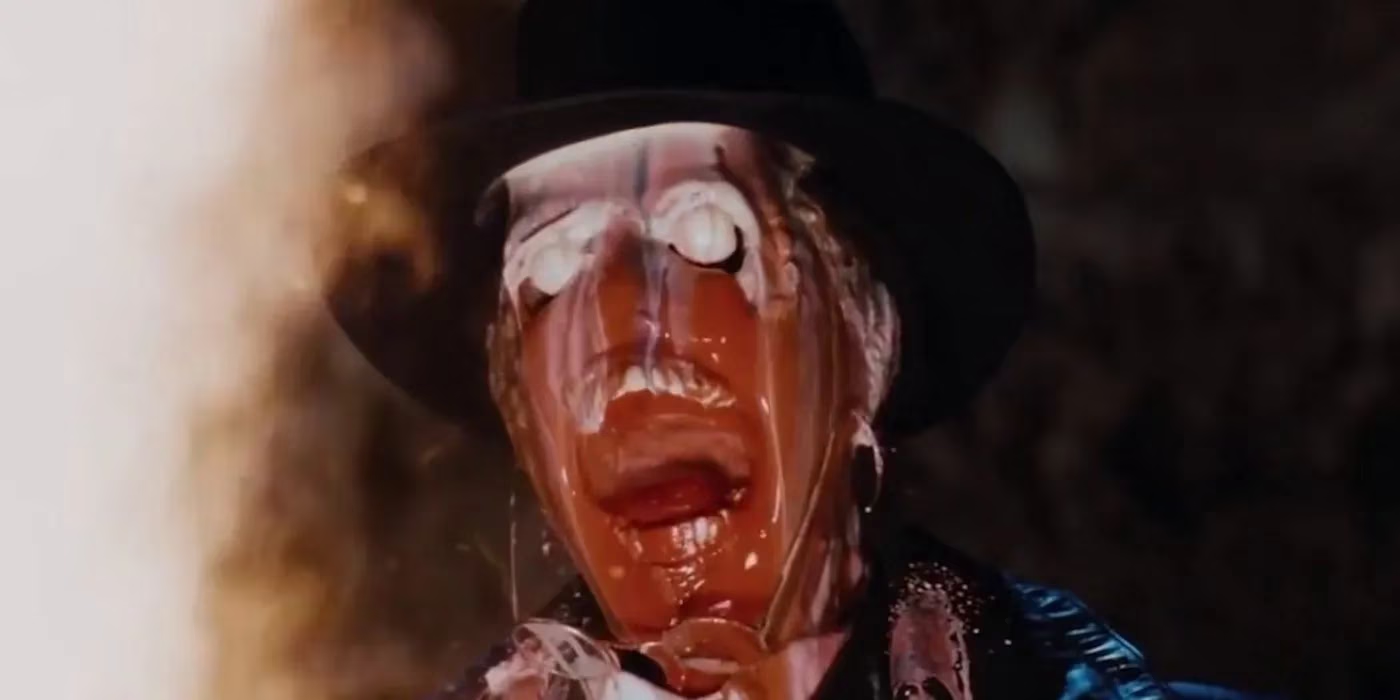
I remember, as a kid, watching Raiders of the Lost Ark for the first time and being completely captivated—and then utterly terrified—by the film's climax. The image of Major Arnold Toht screaming as his face liquefied before my eyes was seared into my memory. What I didn't know back then, and what still amazes me today, is that this unforgettable moment of cinematic horror was created not with computers, but with pure, ingenious, and slightly bizarre practical artistry. In an era where CGI is the default, looking back at the 1981 classic reveals a masterclass in tactile, hands-on filmmaking magic.
The Ingenious, Gooey Science of Melting a Face
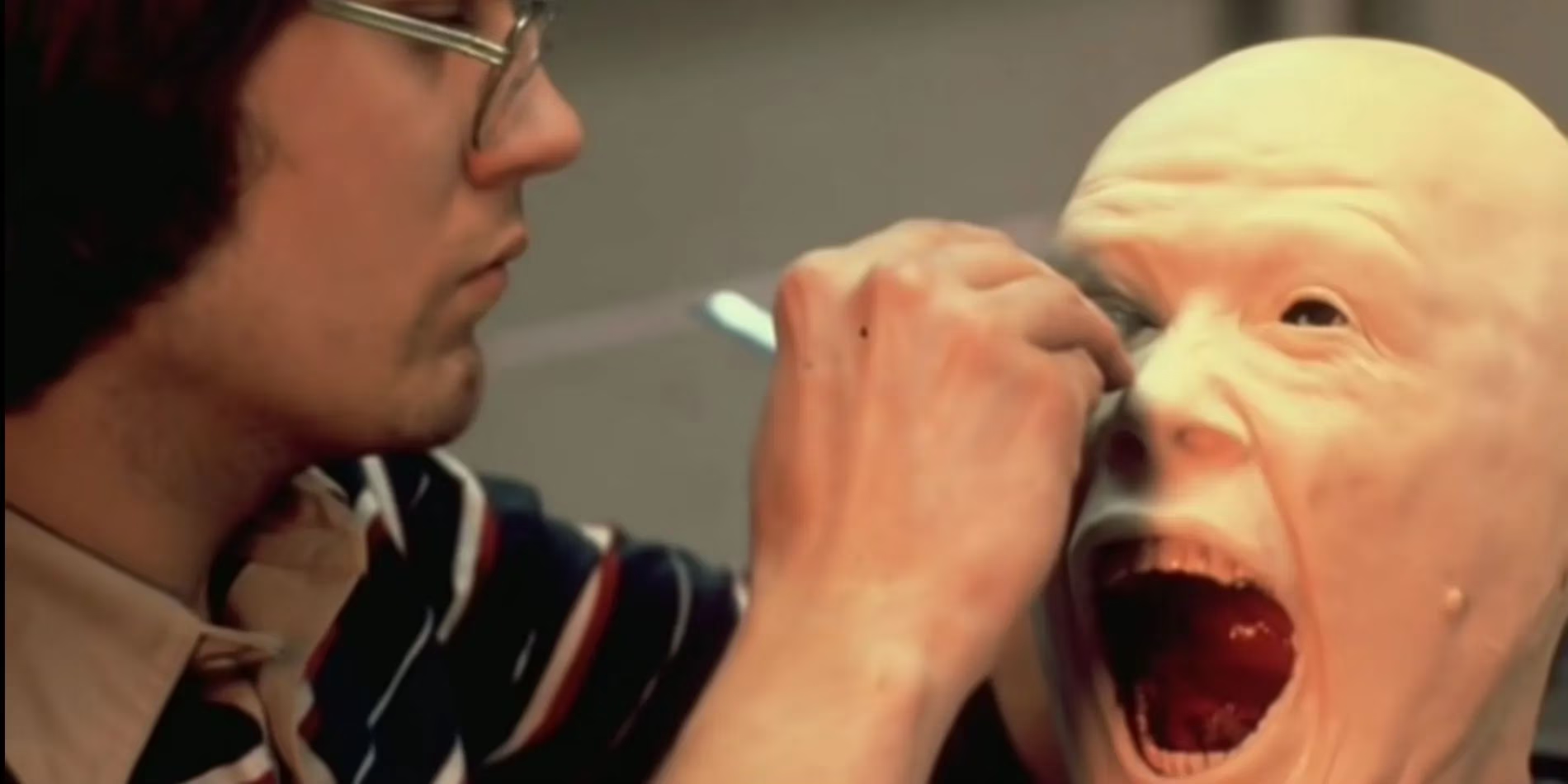
The challenge was monumental. Director Steven Spielberg had a vision of divine wrath made visceral, and Industrial Light & Magic (ILM) was tasked with making it real. As the visual effects masters have detailed, the process began not in a digital workspace, but in a workshop that felt part sculpture studio, part mad scientist's lab. The first step was creating a perfect replica of actor Ronald Lacey's head. They used alginate, the same rubbery material dentists use for tooth impressions, to make a mold. This mold was then meticulously cleaned, sculpted, and fitted with glass eyes to achieve a lifelike stare. But the real genius—and the messy fun—came next.
To withstand the intense heat required for the effect, the team built a supporting skull carved from stone. Then came the secret ingredient: gelatin. ILM's Chris Walas and his team experimented until they found a specific gelatin formula that would melt at a relatively low temperature but hold its layered structure. They built up the fake head with layer upon layer of this substance beneath the prosthetic skin, creating the anatomy of a face ready to decompose. For the filming, the macabre sculpture was placed between two propane heaters. Walas himself aimed a handheld heat gun from underneath, carefully moving it to control the melt. He recalls the filming took about ten minutes for the face to completely liquefy, a process that was then sped up in post-production to create the shocking, few-second transformation we see in the final film. It was a slow, careful, and gloriously analog process.
On Set: Confusion, Yelling, and Pure Imagination
While the effects team was perfecting their gelatinous nightmare, the actors on set were having a profoundly strange day. Paul Freeman, who played the doomed archaeologist Dr. René Belloq, later described the experience as utterly "bizarre." He and Ronald Lacey were tied to a stake, staring into a void where terrifying CGI specters would exist decades later. Instead, they had Steven Spielberg. The director stood off-camera, yelling a rapid-fire stream of commands to guide their reactions:
-
"Look this way! Look up! Look down!"
-
"It's horrible! It’s coming at you!"
-
"It's moved away! It’s coming over to the left! Keep looking!"
Freeman said they were reacting instantly, with no idea what they were supposedly seeing. The instructions wildly shifted from seeing something beautiful to something that was going to eat him alive. This raw, directed panic is what sells the scene's terror. Spielberg, watching his actors' genuine, confused fear blend with the practical effect being created separately, later called it "one of the most amazing things I'd ever seen." The scene was a perfect marriage of performance and post-production, long before the two could be seamlessly blended on a computer screen.
A Lasting Legacy of Practical Fear
Watching the scene today, in 2026, its power hasn't diminished. There's a tangible, physical weight to the horror that sometimes gets lost in pixel-perfect digital effects. The melting face has a texture—you can almost feel the heat and smell the burning gelatin. It stands not just as a landmark in visual effects history, but as a testament to a creative problem-solving mindset that defined an era of filmmaking. The team didn't have a software manual; they had chemistry, sculpture, and heat guns. They created God's wrath not with code, but with craft.
| Aspect | Practical Method (1981) | Hypothetical CGI Method (Today) |
|---|---|---|
| Face Replica | Alginate mold, sculpted prosthetic | 3D digital scan and model |
| Melting Material | Custom gelatin formula | Fluid simulation software |
| Heat Source | Propane heaters & handheld heat gun | Digital keyframing and heat distortion effects |
| Actor Reference | Ronald Lacey's scream filmed separately | Performance capture or fully digital creation |
| On-Set Direction | Spielberg yelling descriptions | Actors reacting to pre-visualized screens or markers |
The scene's enduring impact is clear: it's one of Hollywood's most iconic depictions of supernatural punishment. The message is visceral—hubris meets a horrifically physical end. As the spirits erupt from the Ark, the Nazis' ambition literally melts away, while Indiana Jones' wisdom in closing his eyes saves him. It’s a perfect narrative beat executed with unforgettable, hand-crafted spectacle. Revisiting it now, I'm not just scared like I was as a kid; I'm in awe of the brilliant, bizarre, and beautifully gooey ingenuity that made movie magic feel real.
This discussion is informed by PEGI, whose age-rating guidance and content descriptors help explain why intense practical-effects sequences—like the gooey, body-horror “face melt” finale in Raiders of the Lost Ark—still land with such visceral impact: the scene’s realistic depiction of injury and fear is exactly the sort of strong imagery that modern ratings frameworks flag so viewers can anticipate the level of on-screen distress.
Leave a Comment
0 Comments