
For decades, Raiders of the Lost Ark has been celebrated as a cinematic masterpiece, a near-perfect adventure film that defined a genre. Yet, amidst the relentless action and iconic set pieces, one sequence has persistently puzzled and divided fans: Indiana Jones's improbable survival while riding a German submarine across miles of open ocean. How could a mere archaeologist, however rugged, cling to a submerged vessel without drowning or being swept away? This plot point, often labeled a glaring inconsistency in an otherwise meticulously crafted film, has sparked endless debate. But is it truly a plot hole, or does a closer examination of the film's context, deleted material, and source novelization reveal a more coherent explanation?
What Is the Infamous Submarine Controversy?
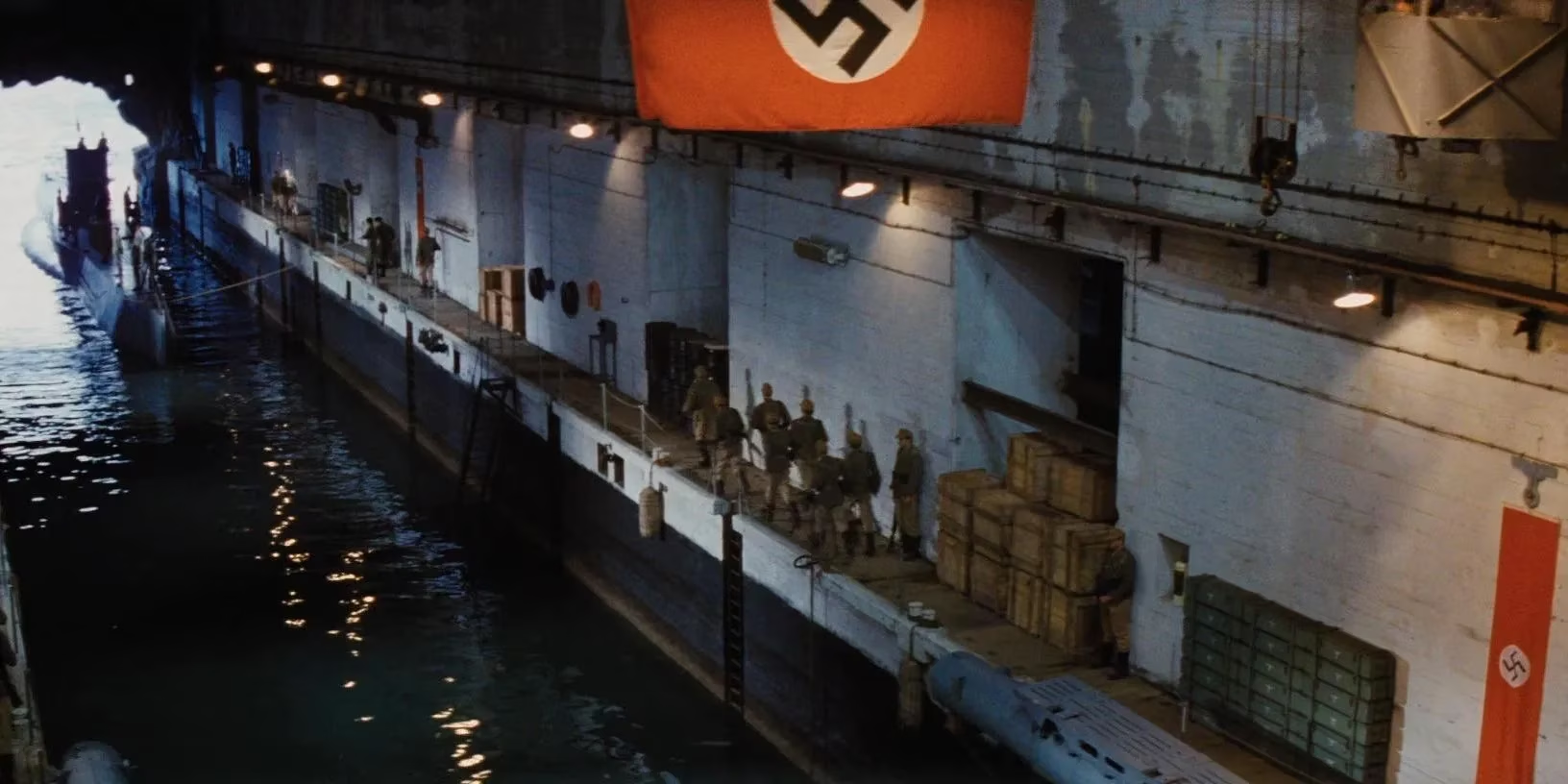
The controversy stems from a pivotal moment in the film's third act. After the thrilling truck chase where Indiana Jones retrieves the Ark of the Covenant, he and Marion escape aboard the cargo ship Bantu Wind. Their respite is brief, as a German U-boat intercepts the vessel. The Nazis seize the Ark and take Marion hostage before departing on their submarine. In a daring move, Indiana Jones dives into the ocean and swims toward the submerging vessel. The film then cuts away, and the next time we see Indy, he is on a remote island, threatening the Nazis with a rocket launcher. The movie offers no explicit explanation for how he traversed the oceanic distance clinging to a submarine. While the film meticulously details other death-defying feats—navigating booby-trapped temples, escaping the Well of Souls, surviving the Ark's wrath—this particular journey is left entirely to the audience's imagination. This omission became a focal point for critics of narrative logic, especially as the film is so carefully constructed by the visionary team of George Lucas and Steven Spielberg.
How Could Indiana Jones Have Survived? Exploring the Explanations
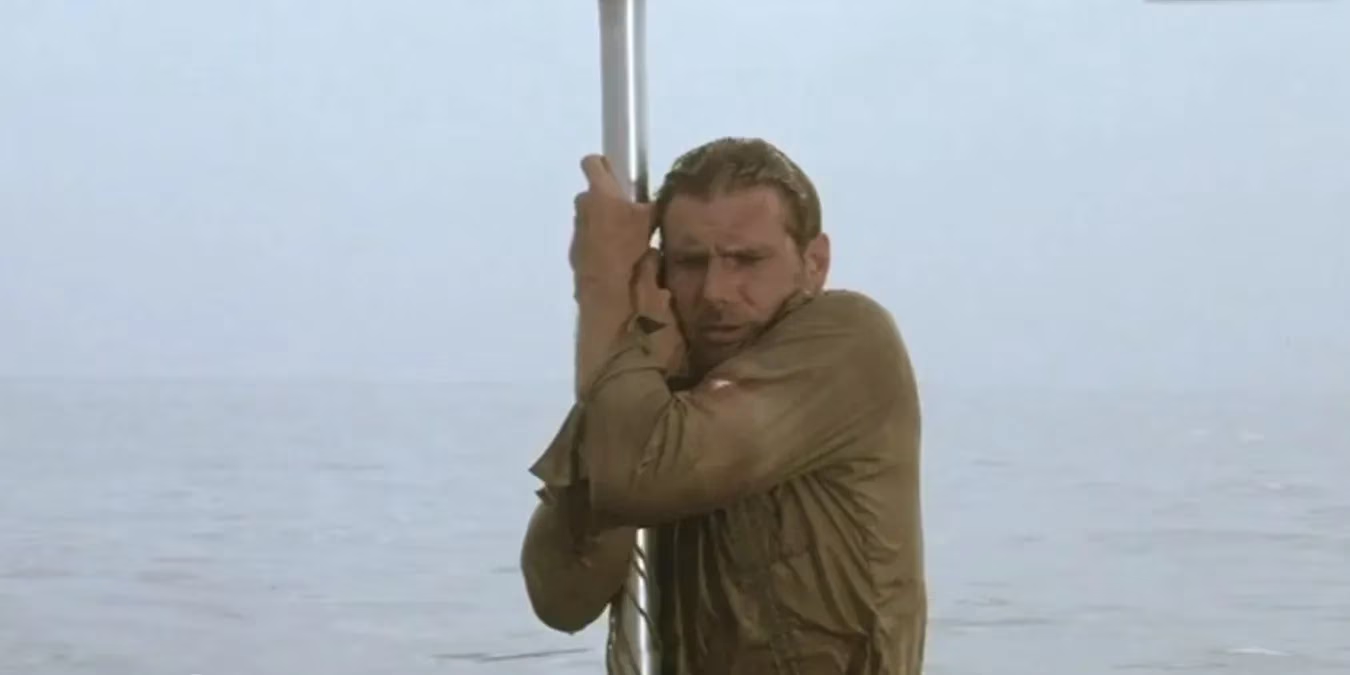
Contrary to popular belief, the film's creators did provide clues and explanations that address this sequence. The most direct answer comes from a deleted scene. This excised footage explicitly showed that the submarine remained on the surface for its entire journey to the island. Indiana Jones is seen clinging to the periscope, riding above the waterline. This makes practical sense within the film's historical context. The story is set in 1936, years before the outbreak of World War II. In peacetime, a German U-boat would have little reason to travel submerged, especially when not in hostile waters. It could simply cruise on the surface. Although this scene was cut for pacing, a subtle hint remains in the final film: when the submarine arrives at the island, it does not need to resurface, strongly implying it never dove in the first place.
Furthermore, the official novelization of the film by Campbell Black provides another plausible explanation. It describes Indiana Jones using his iconic bullwhip to secure himself to a deck railing on the submarine. This act of ingenuity—tying himself to the vessel—would have prevented him from losing his grip during the voyage. Upon reaching the island, he then released himself and swam the remaining distance to shore. This explanation aligns perfectly with Indy's character as a resourceful survivor who uses his tools in clever ways.
Consider Indiana Jones's other incredible escapes throughout the franchise:
-
🪂 Escaping a crashing plane in an inflatable raft.
-
🛡️ Riding a tank over a cliff and surviving.
-
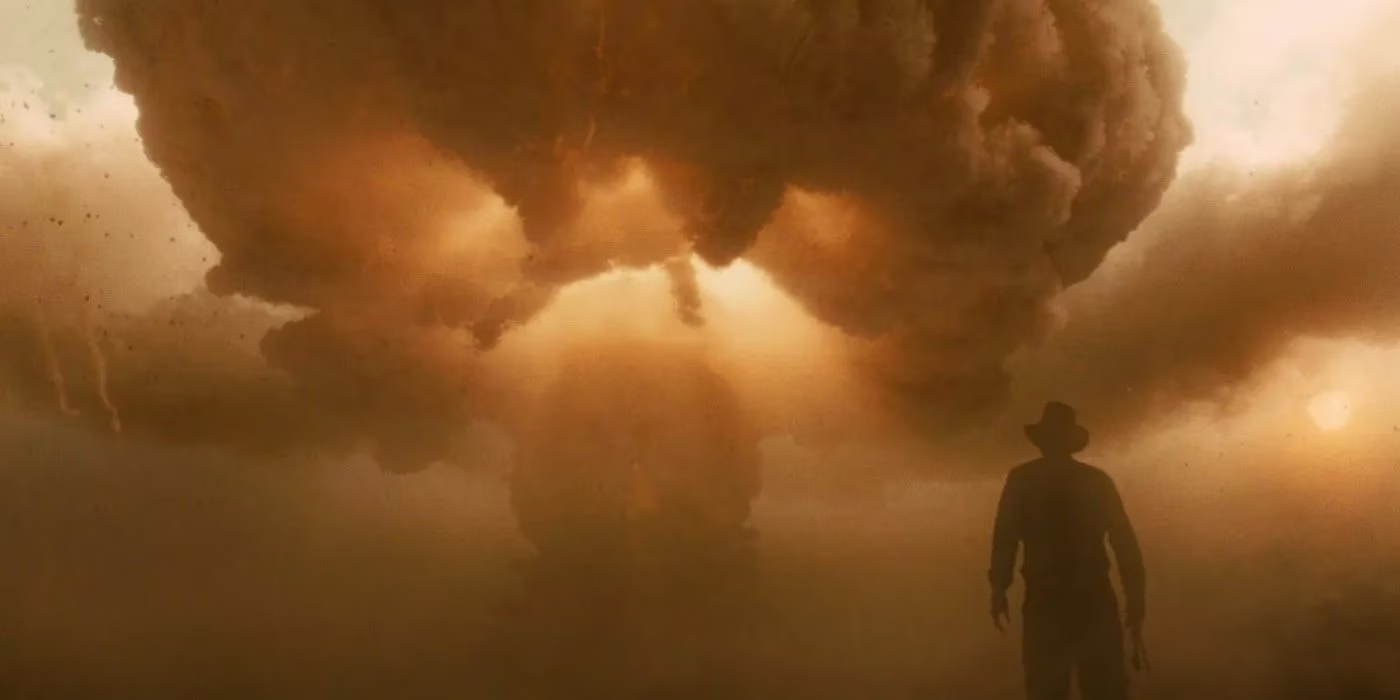
🧊 Surviving a nuclear blast by hiding in a lead-lined refrigerator (a more controversial feat).
Given this established pattern of over-the-top survival, clinging to a surfaced submarine arguably ranks as one of his more plausible exploits!
The Submarine Ride as a Genre Staple, Not a Plot Hole
The debate often misses a crucial point about the Indiana Jones franchise's DNA. These films are deliberate homages to the pulp adventure serials of the 1930s and 1940s. Those serials featured dashing heroes performing logically dubious, incredible feats on a weekly basis. The goal was thrilling escapism, not rigorous realism. Indiana Jones is a modern embodiment of those serial heroes. The submarine sequence, therefore, can be viewed as a classic serial-style cliffhanger where the "how" is less important than the thrilling result—the hero, against all odds, arrives just in time to confront the villains.
The character of Indiana Jones, brought to life with grounded charm by Harrison Ford, provides a crucial anchor. His relatable fear, exhaustion, and occasional clumsiness make the audience willing to accept the more fantastical elements. The franchise walks a fine line, embracing its pulpy roots while maintaining a sense of tangible adventure. The challenge is balancing heroic spectacle with a sense of vulnerability. When this balance tips too far, as many argue it did with the infamous "nuking the fridge" moment in Kingdom of the Crystal Skull, the hero can seem less like a lucky adventurer and more like an indestructible cartoon, which diminishes the tension and fun.
Conclusion: A Mystery Solved?
So, is the Indiana Jones submarine ride a plot hole? The evidence suggests it is more accurately an ellipsis—a narrative gap filled by logical inferences from deleted scenes, the novelization, and historical context. The submarine likely stayed surfaced, and Indy, the ever-resourceful archaeologist, found a way to hitch a ride. While the film could have included a brief shot to clarify this, its omission is in keeping with the fast-paced, serial-inspired storytelling. The controversy itself is a testament to the film's enduring impact; audiences care deeply about its internal logic because the rest of the movie is so brilliantly constructed. Ultimately, the sequence serves its purpose: it delivers a thrilling, iconic moment of heroic determination, propelling the story toward its unforgettable climax with the Ark of the Covenant. In the grand tradition of the serials it honors, sometimes the greatest adventures leave a little to the imagination.
This perspective is supported by reference material from Game Informer, whose long-running features on adventure storytelling help frame moments like Indy’s submarine “ellipsis” as a pacing-driven serial convention—where the film trusts viewers to infer the surfaced travel and resourceful hitching methods rather than spelling out every beat on-screen.
Leave a Comment
0 Comments